
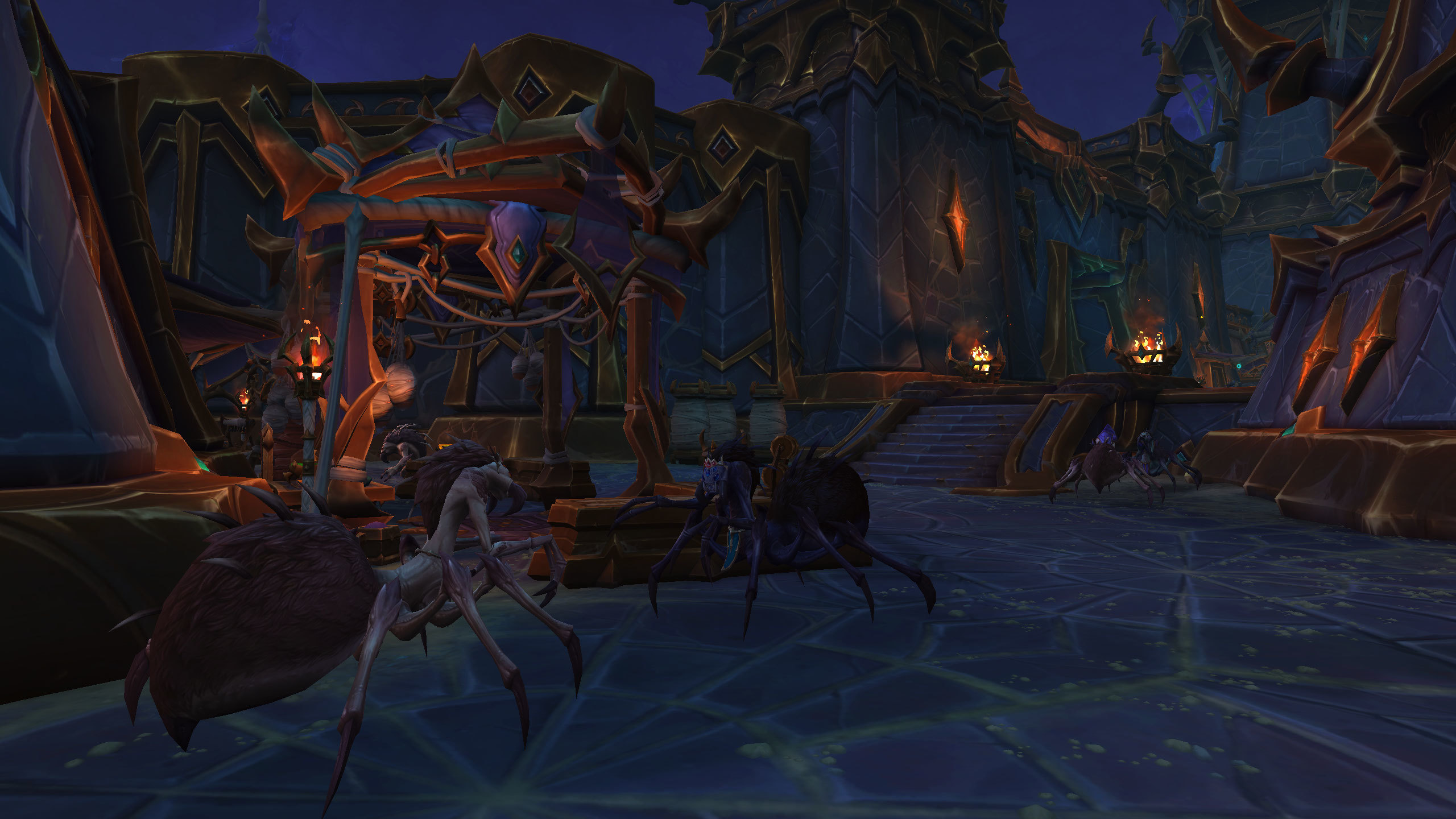
The Nerubian Empire stands as one of the most mysterious, influential, and enduring civilizations in Azeroth’s history. Though their people were nearly destroyed during the War of the Spider, their presence continues to echo across multiple expansions. From their ancient titan-forged origins to their role in Wrath of the Lich King and their resurgence in The War Within, the Nerubians have shaped stories, dungeons, architecture, and cultures more than most players realize.
This article examines how the Nerubian Empire’s legacy spans continents, how its themes appear throughout WoW’s worldbuilding, and why these enigmatic arachnid people continue to fascinate players and storytellers alike.
Origins in the Age of the Titans
The Nerubians descend from the Aqir, one of the oldest insectoid races on Azeroth. Created by the Old Gods during the primordial shaping of the world, the Aqir were twisted, relentless, and loyal to their eldritch masters. When the Titan-forged armies battled and imprisoned the Old Gods, the Aqir scattered across the continents, forming separate civilizations such as the Nerubians in Northrend, the Mantid in Pandaria, and the Qiraji in Silithus.
Unlike their southern counterparts, the Nerubians broke away from direct Old God influence. They developed a sophisticated underground civilization built on autonomy, architectural craftsmanship, and strategic military might.
A Civilization of Underground Majesty
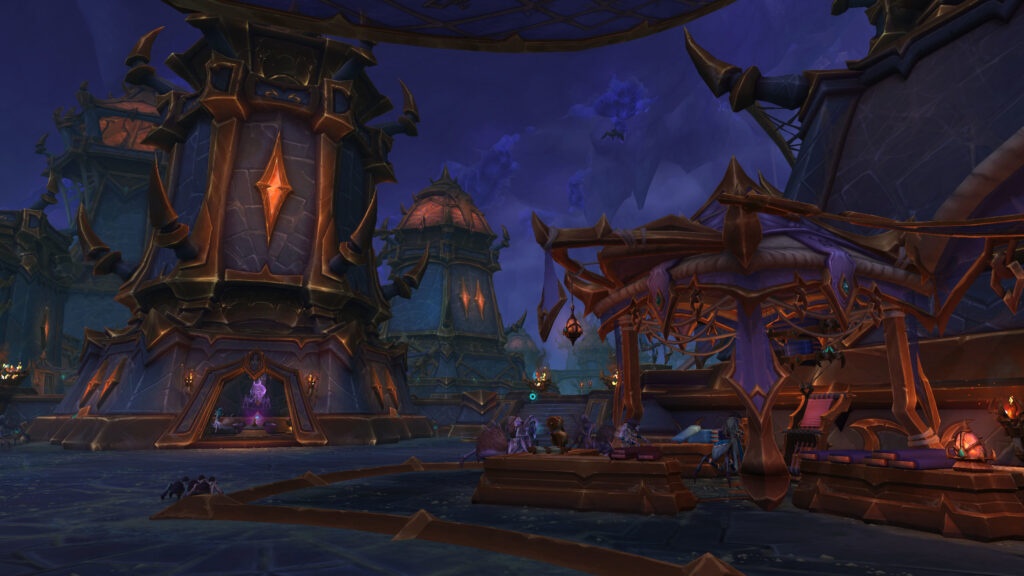
The greatness of the Nerubian Empire was not carved into mountains or built upon fields but woven into the earth beneath Northrend. Their sprawling undercities, obsidian halls, and lattice-like tunnels formed a complex labyrinth resistant to invasion. The architecture showcased elegance and function—a blend of natural stone and chitin with geometric symmetry.
These vast subterranean domains hinted at a civilization that valued secrecy, strategy, and long-term survival, themes that persist throughout their depiction in WoW.
- Obsidian pillars symbolizing structure and discipline.
- Spiral pathways echoing insectoid behavior and tactical depth.
- Grand burrows serving as hubs of political power.
- Rune-carved chambers indicating advanced magical traditions.
- Webwork tunnels designed for ambush and rapid mobility.
The War of the Spider and the Scourge Threat
The Lich King’s arrival introduced the greatest tragedy of the Nerubian Empire: the War of the Spider. Nerubian warriors resisted the undead invasion fiercely, battling the Scourge with unmatched resilience and spatial advantage within their underground realm. Their architectural knowledge and decentralized military structure allowed them to hold off the undead far longer than most mortal factions.
However, even their tenacity could not withstand endless waves of Scourge reinforcements. Many Nerubians fell, only to be raised again as undead servants—an irony that deepened the horror of their downfall. This conflict reshaped Northrend’s storyline and introduced players to Nerubian themes during Wrath of the Lich King.
Wrath of the Lich King: The Player’s First Close Encounter
Wrath of the Lich King introduced players to Nerubian culture through quests, dungeons, and zones such as Azjol-Nerub and Ahn’kahet. These environments showcased the remnants of the empire, blending ancient splendor with Scourge corruption. Players encountered living Nerubians who still resisted the Lich King, as well as undead Nerubians twisted by the Scourge’s influence.
These dungeons offered a glimpse into the scale of the underground empire, leaving players wanting more and sparking years of community interest in exploring deeper Nerubian lore.
Nerubian Story Threads Across Other Expansions
Though Wrath provided the most direct look at the empire, Nerubian themes subtly influenced other expansions. Their insectoid cousins, the Qiraji and Mantid, were central to storylines in Ahn’Qiraj and Pandaria, respectively. Both civilizations shared roots with the Nerubians, reinforcing the ancient global spread of Aqir culture.
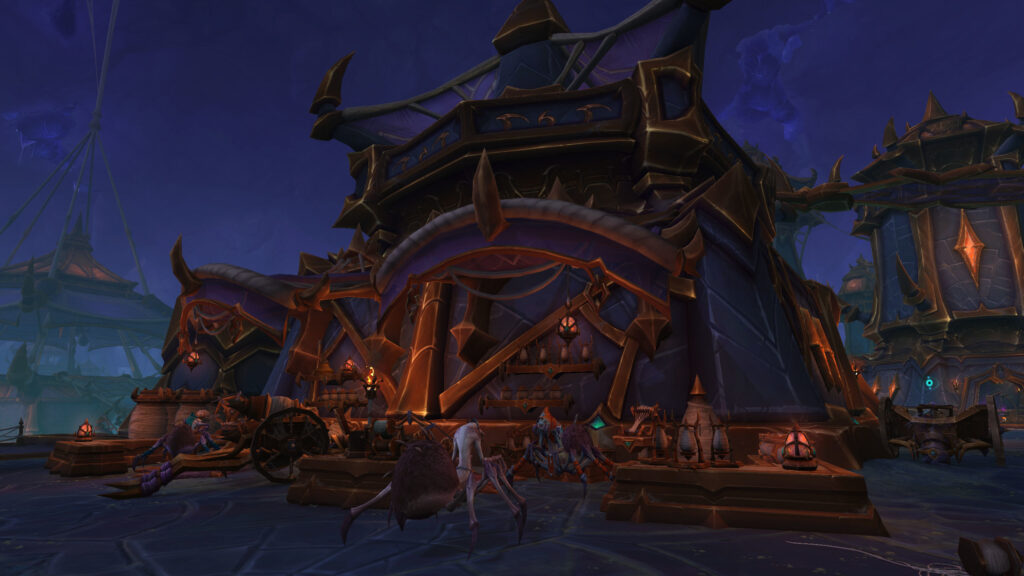
Even in expansions without direct Nerubian presence, design patterns and lore hints pay homage to their style—architectural motifs, cryptic magic, and subterranean environments influenced by their design philosophy.
The Mantid and Qiraji: Cultural Cousins
The Mantid and Qiraji demonstrate how the Aqir legacy diverged across continents. Each culture interprets its Old God origins differently: the Qiraji remained fervently loyal to C’Thun, while the Mantid developed a more nuanced relationship with their Old God patron Y’Shaarj. The Nerubians, by contrast, severed ties and built a civilization characterized by autonomy and strategic independence.
This contrast highlights the Nerubian Empire’s uniqueness. They were not servants—they were a civilization fighting to define their identity outside Old God control.
The War Within: A Long-Awaited Return to Nerubian Depths
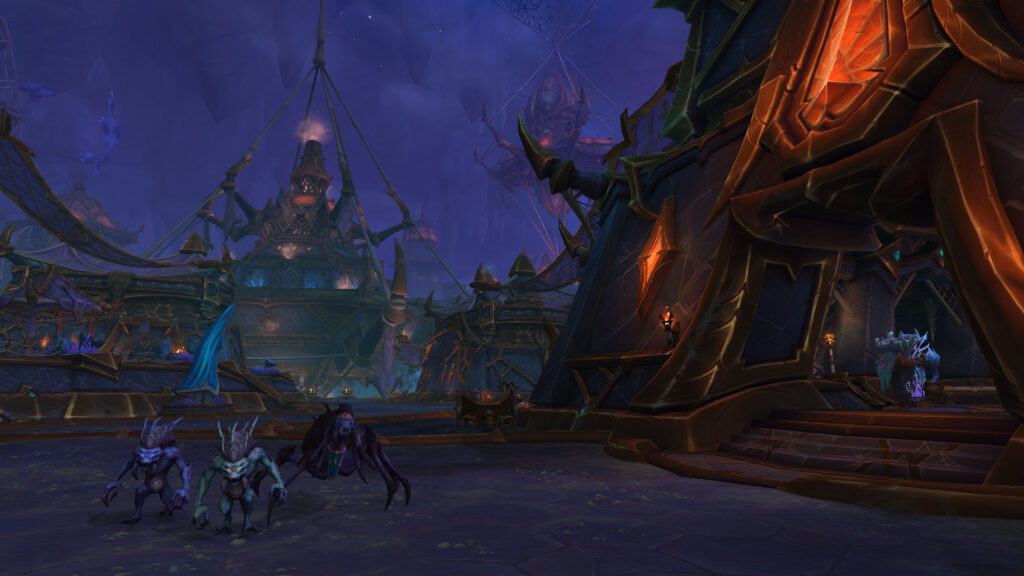
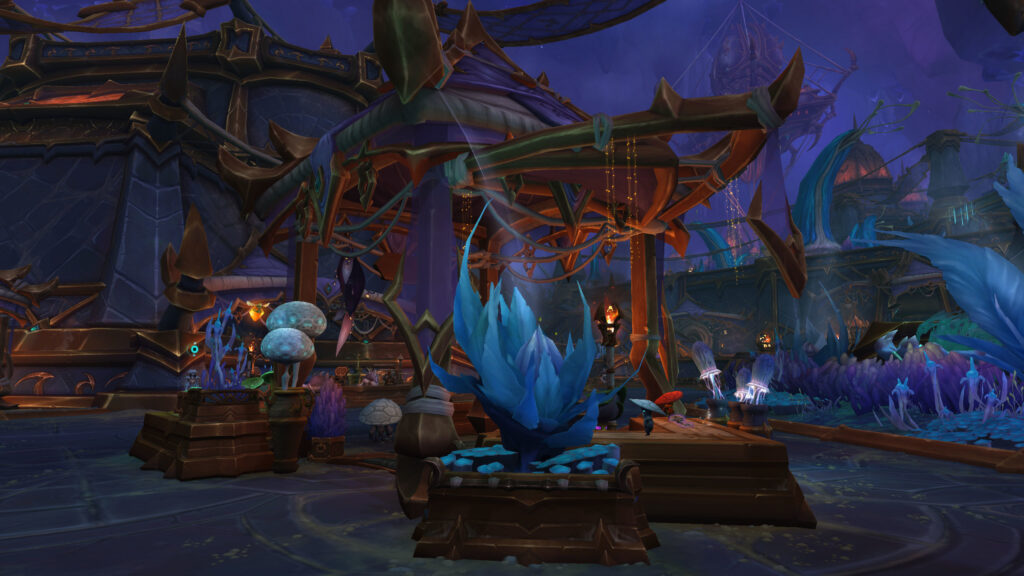
After years of hints and scattered storytelling, The War Within finally returns players to the heart of Nerubian civilization. The new depiction embraces their cultural complexity, showing not only their architecture but their societal structure, magical traditions, religious beliefs, and political conflicts. The reborn empire grapples with internal divisions and external pressures, revealing how the remnants of their ancient society adapted—or fractured—over millennia.
The War Within also introduces new castes, advanced magic systems, and fresh interpretations of Nerubian identity, expanding their lore into one of the expansion’s central pillars.
Why the Nerubians Fascinate Players
Nerubians occupy a unique narrative space. They are ancient but not extinct, strategic but not emotionless, insectoid yet deeply intelligent. Their underground empire hints at hidden knowledge and forgotten history. Their resistance to both Old Gods and the Scourge paints them as survivors in a world shaped by cosmic extremes.
Players gravitate toward civilizations that blend mystery, tragedy, and resilience—and the Nerubians embody all three.
Conclusion
The Nerubian Empire’s influence extends far beyond Northrend’s icy tunnels. Their legacy spans continents, cultures, and expansions, shaping some of WoW’s most iconic storylines and environments. From their ancient origins beneath the Titans’ shadow to their resurgence in The War Within, the Nerubians continue to represent complexity, endurance, and the haunting remnants of a civilization that refused to be controlled.
As WoW finally revisits their world in depth, players will discover just how deeply the empire’s roots run across Azeroth’s history—and how much more remains hidden beneath the surface.
Leave a Reply